Select a table from above
OH -
NO3-
F -
CI -
Br -
I -
S 2-
SO32-
SO42-
CO32-
SiO32-
PO43-
CrO42-
Ac 2-
H 2+
H +
Li +
NH4+
K +
Na +
Ag +
Ba 2+
Ca 2+
Mg 2+
Zn 2+
Mn 2+
Cu 2+
Cu +
Hg +
Hg 2+
Pb 2+
Fe 2+
Al 3+
Cr 3+
Bi 3+
Sn 2+
Sr 2+
*
Litmus
The colourant of natural origin - one of the first and most well known acid-base (ph) indicators.
[H+] > [OH-] PH = 0
[H+] = [OH-] PH = 7
[OH-] > [H+] PH = 14
Phenolphthalein
Triphenylmethane dyes - acid-base (ph) indicator that changes color from colorless to red-violet (raspberry).
[H+] > [OH-] PH = 0
[H+] = [OH-] PH = 7
[OH-] > [H+] PH = 14
Methyl-orange
Known acid-base (ph) indicator a syhtnetic organic dye of the azo group
[H+] > [OH-] PH = 0
[H+] = [OH-] PH = 7
[OH-] > [H+] PH = 14
Universal
Indicator for the variability of the edges of polymer strips, which determines the acidity of solutions.
[H+] > [OH-] PH = 0
[H+] = [OH-] PH = 7
[OH-] > [H+] PH = 14
7S
6S
5S
4S
3S
2S
1S
7P
6P
5P
4P
3P
2P
6D
5D
4D
3D

The electron configuration is the formula for the location of electrons in the various electron shells of an atom of a chemical element or molecule. The electron configuration is usually written for atoms in their ground state.

5F
4F

The following rules exist for determining the electronic configuration of an element.

1. The Principles of Filling

According to the filling principle, electrons in the ground state of an atom fill the orbitals in the sequence of increasing orbital energy levels.

2. Pauli's Inhibition Principle

According to this principle, no more than two electrons can be on any orbital.

3. The Hund Principle

According to this rule, the filling of the orbitals of one subshell begins with single electrons, and only after the single electrons occupy all the orbitals can the final filling of the orbitals with electron pairs take place.
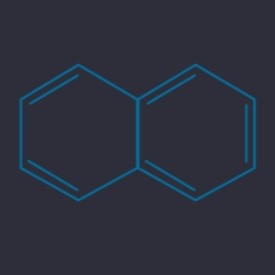
Naphthalene

0.00031g/1000mL

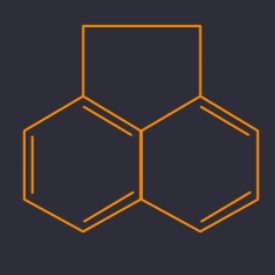
Acenaphthene

3.47 * 10-4g/100mL

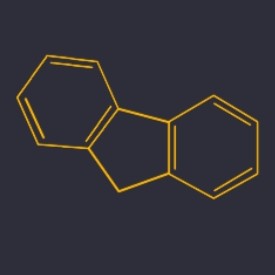
Fluorene

1.9 * 10-5g/100mL

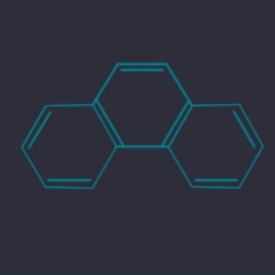
Phenanthrene

1.18 * 10-4g/100mL

Anthracene

4.34 * 10-6g/100mL

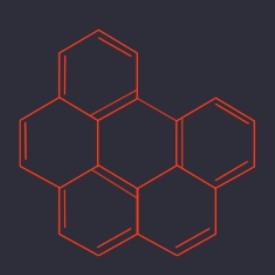
Benzo(ghi)perylene

2.6 * 10-8g/100mL

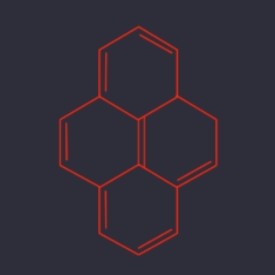
Pyrene

6.2 * 10-6g/100mL

Indeno(1,2,3-cd)pyrene

6.2 * 10-6g/100mL

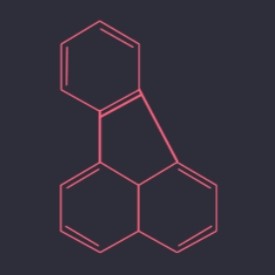
Fluoranthene

2.65 * 10-5g/100mL

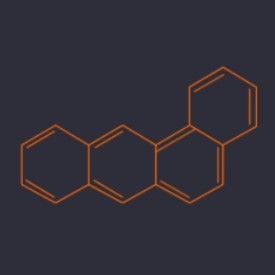
Benzo(α)anthracene

2.65 * 10-5g/100mL

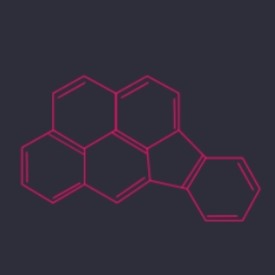
Benzo(k)Fluoranthene

5.5 * 10-8g/100mL

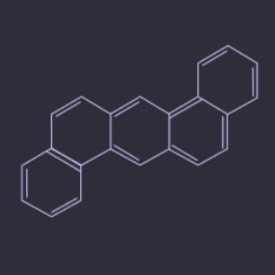
Dibenzo(a,h)anthracene

5.5 * 10-8g/100mL

Chrysene

1.8 * 10-7g/100mL
Boiling Point: -161.5ºC
Melting Point: -182.5ºC
Boiling Point: -88.6ºC
Melting Point: -183.3ºC
Boiling Point: -42.1ºC
Melting Point: -187.6ºC
Boiling Point: -0.5ºC
Melting Point: -138.3ºC
Boiling Point: -11.7ºC
Melting Point: -159.6ºC
Melting Point: -129.7ºC
Boiling Point: 36.1ºC
Boiling Point: 27.8ºC
Melting Point: -159.1ºC
Boiling Point: 9.5ºC
Melting Point: -129.7ºC